
-
Jan, Thu, 2026

7 Essential Rolling Grow Benches Benefits
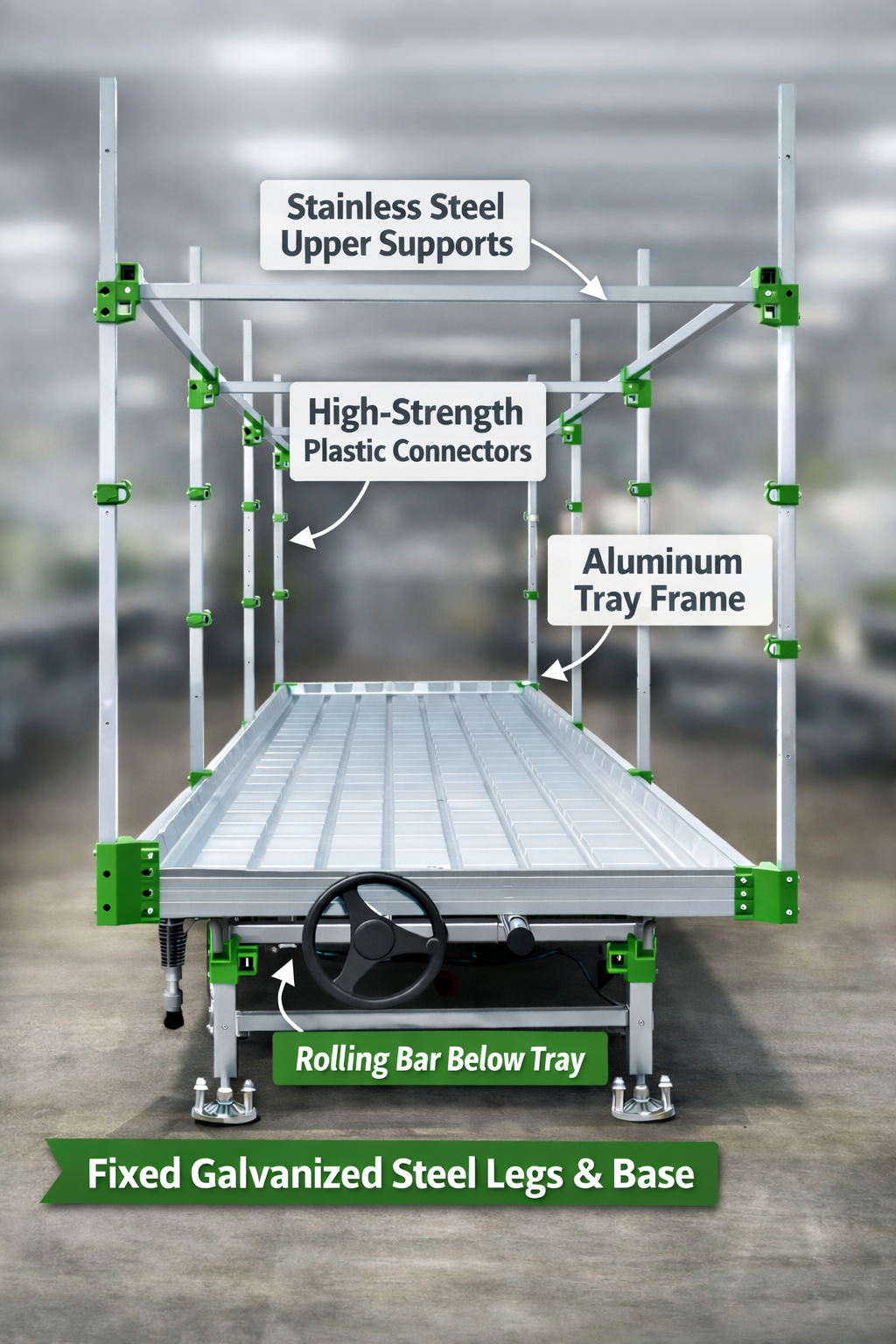
Rolling grow benches turn dead aisle space into productive canopy. The feet stay fixed on the floor; the tray and bed ride on a rolling bar underneath. When you turn the bar, the whole bed slides left or right over a galvanized base, so you only open an aisle where you actually need to work.
What Is a Rolling Grow Bench System?
A rolling grow bench system is a row of long beds sitting on fixed stands with a drive bar under the tray. The bar ties into bearings and guides on the base frame. Rotate it at the end of the row and the upper bed glides sideways over the stationary structure. Legs and anchors never move, which makes the whole system feel solid even when fully loaded.
In a typical flower room, that side-to-side movement is enough to reclaim one or two full rows of canopy without changing the footprint, power service, or number of rooms.
1. More Canopy From the Same Footprint
Fixed grow tables force you to leave multiple aisles open all the time. Those walkways are there for people, not plants. With rolling benches you collapse everything down to a single working aisle, then slide beds to reach the row you care about.
If your flowers has a decent wholesale value, the extra canopy usually pays for the benches in a few harvests, especially in buildings where adding new licensed square footage is slow or politically painful.
2. Better Alignment With Modern Lighting
LED grow fixtures throw clean rectangles. If your benches don’t line up with those rectangles, you end up lighting aisles or fighting hot and cold spots along the edges. Rolling benches let you design benches and lights together: set a bench width that matches the beam, then use the rolling bar to keep beds centered under each run of fixtures.
Some growers push it further by adding simple under canopy light bars beneath the beds so the lower tier keeps working instead of being stripped off. When the horizontal layout and the vertical light profile both make sense, grams per square foot go up without throwing more watts at the room.
3. Smoother Workflow and Easier Access
Rolling grow benches aren’t only about plant count. They also change how crews move through the room. Instead of walking long, fixed corridors to reach one problem spot, a tech can shift the bed, open a narrow aisle right where the work is, and stay in that zone until the task is finished.
Less wandering and fewer detours add up over a full production schedule. On big sites, shaving a few minutes off routine tasks in every room can be the difference between keeping up with the schedule and always being a day behind.
4. Cleaner Irrigation and Drainage Management
Most rolling benches carry flood tables, drip manifolds, or both. Supply lines, drains, low-voltage cable, and sensor leads can all ride the base frame and come up into the bed frame in a controlled way. Because the feet stay put and only the upper bed moves, you don’t have to design around floor tracks or moving legs when you lay out irrigation.
A tidy plumbing run means fewer low spots, fewer surprise drips, and less standing water in the aisles. That’s good for plants, good for shoes, and good for inspectors.
5. Smart Mixed-Material Construction
A commercial rolling bench doesn’t rely on one metal for everything. Each part is built from what makes the most sense in that position:
- Galvanized steel feet, uprights, and lower cross-beams handle the real work: they anchor to the slab, carry the load, and support the rolling bar and bed frame. This is the structure you trust when the bench is packed with wet media and tall plants.
- An aluminum bed frame around the tray keeps weight down while resisting corrosion in the splash zone where nutrient solution and runoff live.
- Stainless steel upper brackets and supports sit closer to foliage, in the most humid and most frequently washed area of the room, where extra corrosion resistance and easier cleaning pay off.
- High-strength plastic connectors and non-structural joints tie bed-frame sections together, cap exposed ends, and isolate dissimilar metals. They also cut down on noise as the bed moves and can be swapped quickly if a piece is damaged.
The result is a bench that feels rigid under load, slides cleanly on the rolling bar, and ages gracefully instead of rusting or squeaking its way through every turn.
6. Consistent Layouts Across Multiple Rooms
Once you find a bench length, width, and aisle pattern that works, you can repeat it in every flower room. That makes training simpler and lets you compare one room to another without wondering whether the layout is skewing the numbers.
If you want a visual starting point, the rolling bench layout notes in this Next Generation bench write-up show how different spans and aisle positions change density and workflow before you commit to steel.
7. Strong ROI When Paired With Efficient Lighting
Rolling benches get even more interesting when you upgrade grow lights at the same time. If you are already planning a new top-light grid, under-canopy layer, or better dimming control, treating benches and lighting as one project lets you design for yield instead of patching around an old layout.
High-efficacy horticultural LEDs in many regions qualify for utility incentives. Benches themselves usually aren’t on the rebate line, but the extra canopy they unlock helps the whole package pencil out faster. Before you spec hardware, it’s worth skimming a straightforward grow-light rebate guide so you don’t leave free money on the table when you file.
How Rolling Grow Benches Fit Into Modern Facility Design
Rolling benches sit comfortably in modern, data-driven facilities. They give you a fixed base for cable trays, fertigation lines, sensors, and under-canopy lights, and a mobile bed that lets plants and people trade places without rebuilding the room every time.
For operators running multiple sites, standardizing on one rolling bench platform and layout logic also keeps design, purchasing, and SOPs much cleaner than treating every room as a one-off experiment.
When a Rolling Grow Bench Makes the Most Sense
Rolling benches shine where space is tight, canopy is valuable, and you can’t or don’t want to push out another wall. Hobby tents and small mother rooms can survive on fixed tables. High-value flower rooms, dense veg spaces, and busy propagation zones usually justify the upgrade.
Final Thoughts
A rolling grow bench is not just a grow table that moves. It’s a way to reorganize space, light, and labor around how your flowers actually grows. By converting aisles into canopy, keeping benches aligned with modern lighting, and using galvanized steel, aluminum, stainless, and plastic only where each material makes sense, you end up with infrastructure that feels solid now and still looks respectable a few years in.
If you are sketching a new facility or rebuilding an existing one, it’s worth asking a simple question: how much more canopy could a rolling layout give you in the rooms you already have? For a lot of commercial growers, that is the upgrade that turns benches from background hardware into one of the cleaner returns in the whole project.
To see how that looks as a finished system, you can always start by walking the options at GrowRollingBench.com and then tailor the details to your own rooms.
