
Grow Rolling Benches
v-track rolling bench system, v-track rolling bench
4 Critical V-Track Rolling Bench System Advantages for Grow Rooms

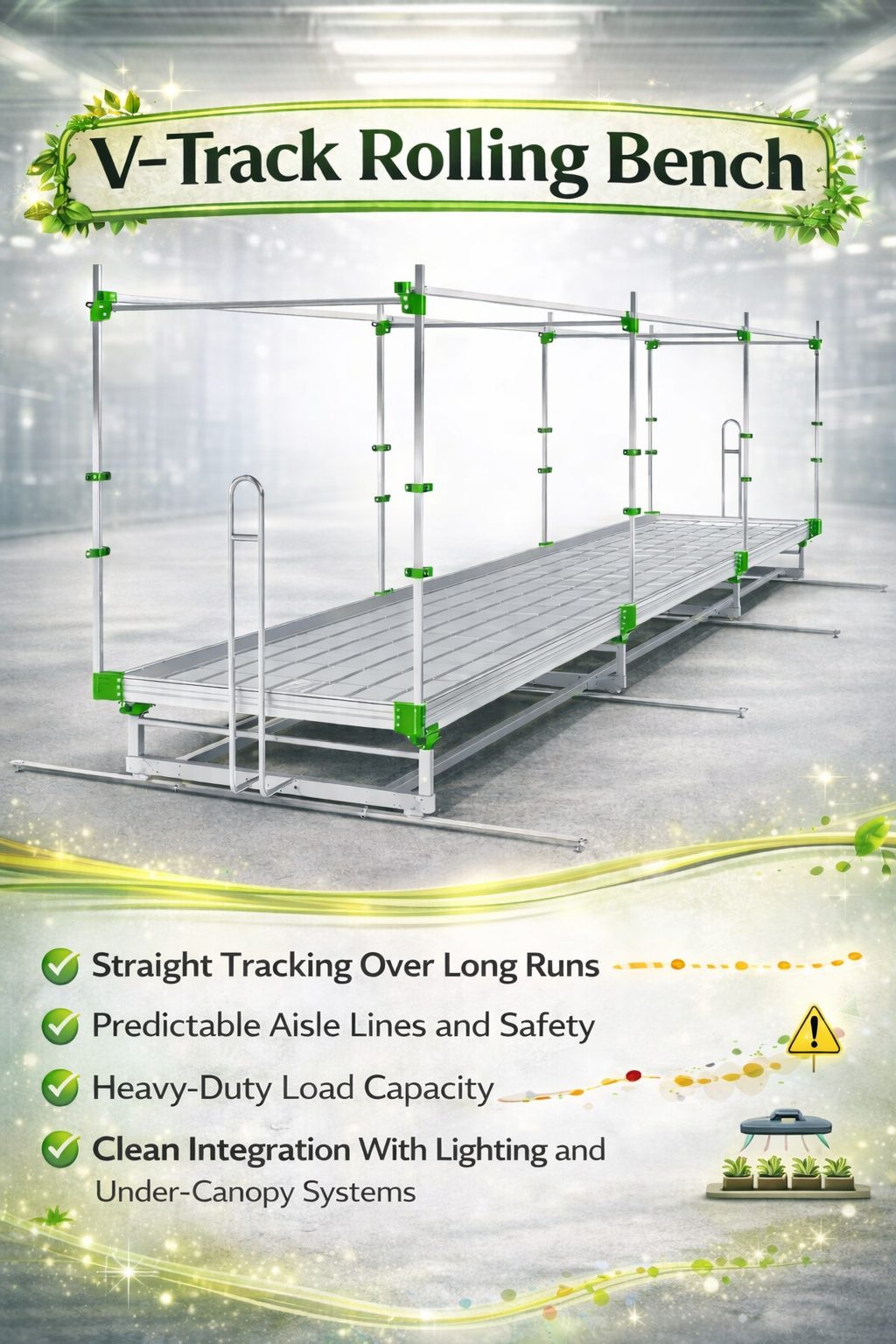
A v-track rolling bench system uses floor-mounted rails and guided wheels to move the entire bench side to side. Instead of just sliding the tray on a rolling bar, the whole frame rides on steel tracks set in the slab. When the bench moves, legs, frame, tray, and crop all travel together in a straight lane.

What Is a V-Track Rolling Bench System?

On a v-track bench, each run sits on a pair of V-shaped rails anchored into the concrete. Matching V-groove wheels under the base frame capture the rails so the bench can only move along that path. Staff push or crank the bench and the whole unit rolls to open or close an aisle.

Because the wheels are trapped in the tracks, the row stays aligned even when loaded with wet media and tall plants. That “locked in” feel is one reason greenhouse growers and some larger indoor rooms still choose v-track over other rolling styles.

1. Straight Tracking on Long Runs

Once benches get long, keeping them straight matters. A v-track rolling bench system forces the run to follow the rail line, so it doesn’t drift over time. In wide flower rooms or long greenhouse bays, that makes it easier to keep rows parallel and aisles where you expect them to be.

V-rails do want a reasonably flat, true slab beneath them. If the concrete is badly heaved or patched, you usually fix the floor or pour curbs and set the tracks on a corrected surface. When the rails are installed properly, though, the bench motion stays clean and predictable from end to end.

2. Predictable Aisle Lines and Safety

Because the bench can only roll along its tracks, the working aisle always opens in the same place. That helps with everything that has to line up around the bench: door swings, emergency routes, irrigation corridors, and equipment paths.

In facilities where fire marshals and building officials want to see clear, repeatable access, that repeatability is a real selling point. You can show exactly how wide the aisle will be at full open and where it sits relative to exits and panels, rather than guessing based on caster positions.

3. Heavy-Duty Load Handling

V-track benches are comfortable carrying weight. Loads travel from the tray into the frame, down through multiple wheels, and into the rails and slab. When the tracks are level and properly anchored, the bench feels planted even with deep flood tables, tall trellised cannabis, or heavy containers.

That’s one reason v-track remains common in greenhouse-style projects that started life with HPS and are now being upgraded to LED. When you look at long-span layouts and lighting grids—like the concepts shown in the Next Generation rolling bench design notes—a v-track frame fits naturally into that older greenhouse mindset while still playing nicely with modern fixtures.

4. Clean Integration With Lighting and Under-Canopy Systems

V-track doesn’t stop you from running a tight lighting layout. Rails are set on a fixed spacing; benches roll in known lanes beneath the lights. Top-light grids can sit straight across the room, and when you move a bench, plants stay under the same row of fixtures.

Under the canopy, it’s simple to fasten single-channel bars or other supplemental fixtures to the lower frame. A basic run of under-canopy lighting can live on the bench so that when you roll the row, both light layers move with it. That keeps side lighting and bottom lighting lined up instead of leaving fixtures stranded over bare aisle space.

V-Track Versus Bar-Driven Rolling Benches

V-track benches aren’t the only way to reclaim aisle space. Bar-driven benches with fixed legs solve the same problem with a different mechanism. Choosing between them depends on how the room is built and how you want to service it.

  • Bar-driven, fixed-foot benches keep the feet anchored and slide the bed on a rolling bar under the tray. They avoid floor tracks, which some growers prefer for simple cleaning and straightforward retrofits in tight indoor rooms.
  • V-track rolling benches move the entire structure on rails. They shine on long, straight runs where you want a guided path and a familiar greenhouse feel, and where you’re willing to get the floor and rail install right up front.

In practice, many operators end up using both: bar-driven benches inside dense indoor flower rooms and v-track benches in longer bays or hybrid greenhouse spaces. The common goal is the same—more canopy and better access from the same footprint.

Planning a V-Track Rolling Bench Layout

Planning starts with the room you actually have: column grid, drain positions, manifold locations, and the cleanest routes for staff and carts. Once those are set, you can drop in rail lines, bench lengths, and the maximum travel for each run.

At the same time, it makes sense to sketch the lighting grid and control zones. A neat v-track grid under a matched LED layout helps avoid wasted photons in aisles. When LEDs hit the right micromole numbers at lower wattage, you may qualify for rebates or incentives; a simple grow-light rebate guide is a good checkpoint before you lock in hardware and send a PO.

Where a V-Track Rolling Bench Makes Sense

V-track is worth a serious look when:

  • You’re running long, straight bays where tracking and alignment matter more than anything else.
  • The slab is in decent shape or you’re already planning to pour curbs or correct surfaces for other reasons.
  • Owners or investors are coming from a greenhouse background and want something they recognize and trust.
  • You like the idea of benches, lighting, and sometimes even crop trolleys all following the same rail logic.

In smaller, highly serviced rooms full of floor drains, conduits, and sensor stubs, a track-free, bar-driven bench is often easier to install and live with. The goal isn’t to crown a single winner; it’s to match the mechanism to the space.

Final Thoughts

A v-track rolling bench system trades some installation work—rails, anchors, careful layout—for clean, guided motion and a bench that behaves the same way every time you open an aisle. When the slab is good and the room is long, that trade can be well worth it.

If you’re comparing v-track to bar-driven rolling benches, it helps to walk the room on paper: where people enter, where water and power come from, how carts move, and where the lights will actually hang. Once that picture is clear, you can decide whether rails, fixed-foot benches, or a mix of both will make your grow easier to run over the next few cycles instead of just the next few weeks.

For hardware examples and layout ideas on both v-track and bar-driven designs, you can start with the bench options at GrowRollingBench.com and then tune the details around your own building.

rolling grow benches
7 Essential Rolling Grow Benches Benefits

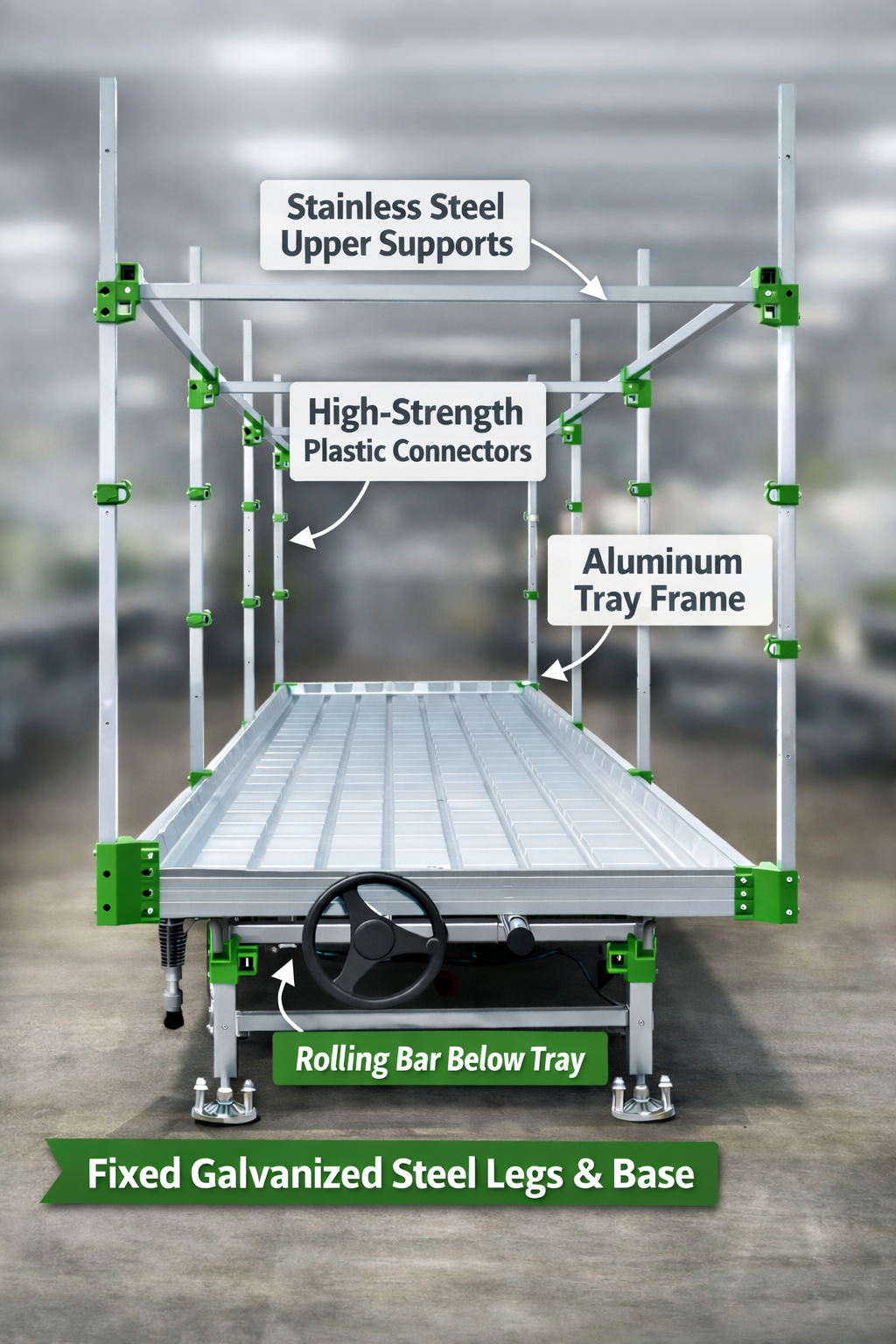
Rolling grow benches turn dead aisle space into productive canopy. The feet stay fixed on the floor; the tray and bed ride on a rolling bar underneath. When you turn the bar, the whole bed slides left or right over a galvanized base, so you only open an aisle where you actually need to work.

What Is a Rolling Grow Bench System?

A rolling grow bench system is a row of long beds sitting on fixed stands with a drive bar under the tray. The bar ties into bearings and guides on the base frame. Rotate it at the end of the row and the upper bed glides sideways over the stationary structure. Legs and anchors never move, which makes the whole system feel solid even when fully loaded.

In a typical flower room, that side-to-side movement is enough to reclaim one or two full rows of canopy without changing the footprint, power service, or number of rooms.

1. More Canopy From the Same Footprint

Fixed grow tables force you to leave multiple aisles open all the time. Those walkways are there for people, not plants. With rolling benches you collapse everything down to a single working aisle, then slide beds to reach the row you care about.

If your flowers has a decent wholesale value, the extra canopy usually pays for the benches in a few harvests, especially in buildings where adding new licensed square footage is slow or politically painful.

2. Better Alignment With Modern Lighting

LED grow fixtures throw clean rectangles. If your benches don’t line up with those rectangles, you end up lighting aisles or fighting hot and cold spots along the edges. Rolling benches let you design benches and lights together: set a bench width that matches the beam, then use the rolling bar to keep beds centered under each run of fixtures.

Some growers push it further by adding simple under canopy light bars beneath the beds so the lower tier keeps working instead of being stripped off. When the horizontal layout and the vertical light profile both make sense, grams per square foot go up without throwing more watts at the room.

3. Smoother Workflow and Easier Access

Rolling grow benches aren’t only about plant count. They also change how crews move through the room. Instead of walking long, fixed corridors to reach one problem spot, a tech can shift the bed, open a narrow aisle right where the work is, and stay in that zone until the task is finished.

Less wandering and fewer detours add up over a full production schedule. On big sites, shaving a few minutes off routine tasks in every room can be the difference between keeping up with the schedule and always being a day behind.

4. Cleaner Irrigation and Drainage Management

Most rolling benches carry flood tables, drip manifolds, or both. Supply lines, drains, low-voltage cable, and sensor leads can all ride the base frame and come up into the bed frame in a controlled way. Because the feet stay put and only the upper bed moves, you don’t have to design around floor tracks or moving legs when you lay out irrigation.

A tidy plumbing run means fewer low spots, fewer surprise drips, and less standing water in the aisles. That’s good for plants, good for shoes, and good for inspectors.

5. Smart Mixed-Material Construction

A commercial rolling bench doesn’t rely on one metal for everything. Each part is built from what makes the most sense in that position:

  • Galvanized steel feet, uprights, and lower cross-beams handle the real work: they anchor to the slab, carry the load, and support the rolling bar and bed frame. This is the structure you trust when the bench is packed with wet media and tall plants.
  • An aluminum bed frame around the tray keeps weight down while resisting corrosion in the splash zone where nutrient solution and runoff live.
  • Stainless steel upper brackets and supports sit closer to foliage, in the most humid and most frequently washed area of the room, where extra corrosion resistance and easier cleaning pay off.
  • High-strength plastic connectors and non-structural joints tie bed-frame sections together, cap exposed ends, and isolate dissimilar metals. They also cut down on noise as the bed moves and can be swapped quickly if a piece is damaged.

The result is a bench that feels rigid under load, slides cleanly on the rolling bar, and ages gracefully instead of rusting or squeaking its way through every turn.

6. Consistent Layouts Across Multiple Rooms

Once you find a bench length, width, and aisle pattern that works, you can repeat it in every flower room. That makes training simpler and lets you compare one room to another without wondering whether the layout is skewing the numbers.

If you want a visual starting point, the rolling bench layout notes in this Next Generation bench write-up show how different spans and aisle positions change density and workflow before you commit to steel.

7. Strong ROI When Paired With Efficient Lighting

Rolling benches get even more interesting when you upgrade grow lights at the same time. If you are already planning a new top-light grid, under-canopy layer, or better dimming control, treating benches and lighting as one project lets you design for yield instead of patching around an old layout.

High-efficacy horticultural LEDs in many regions qualify for utility incentives. Benches themselves usually aren’t on the rebate line, but the extra canopy they unlock helps the whole package pencil out faster. Before you spec hardware, it’s worth skimming a straightforward grow-light rebate guide so you don’t leave free money on the table when you file.

How Rolling Grow Benches Fit Into Modern Facility Design

Rolling benches sit comfortably in modern, data-driven facilities. They give you a fixed base for cable trays, fertigation lines, sensors, and under-canopy lights, and a mobile bed that lets plants and people trade places without rebuilding the room every time.

For operators running multiple sites, standardizing on one rolling bench platform and layout logic also keeps design, purchasing, and SOPs much cleaner than treating every room as a one-off experiment.

When a Rolling Grow Bench Makes the Most Sense

Rolling benches shine where space is tight, canopy is valuable, and you can’t or don’t want to push out another wall. Hobby tents and small mother rooms can survive on fixed tables. High-value flower rooms, dense veg spaces, and busy propagation zones usually justify the upgrade.

Final Thoughts

A rolling grow bench is not just a grow table that moves. It’s a way to reorganize space, light, and labor around how your flowers actually grows. By converting aisles into canopy, keeping benches aligned with modern lighting, and using galvanized steel, aluminum, stainless, and plastic only where each material makes sense, you end up with infrastructure that feels solid now and still looks respectable a few years in.

If you are sketching a new facility or rebuilding an existing one, it’s worth asking a simple question: how much more canopy could a rolling layout give you in the rooms you already have? For a lot of commercial growers, that is the upgrade that turns benches from background hardware into one of the cleaner returns in the whole project.

To see how that looks as a finished system, you can always start by walking the options at GrowRollingBench.com and then tailor the details to your own rooms.

Table of Contents

grow room yield optimization, grow room yield, rolling bench system
7 Proven Grow Room Yield Optimization Wins

Many commercial growers eventually hit the same wall: the building is full, every room is running, and there is no easy way to add more lights or plants without major construction. In a business where square footage is expensive and permitting is slow, the smartest move is often to focus on grow room yield optimization using the space you already have. That is where a well-designed rolling bench system becomes one of the highest-ROI upgrades in the facility.

Instead of filling a room with fixed tables and permanent aisles, rolling benches slide side to side on tracks, allowing you to keep one movable access aisle and turn the rest of the floor into productive canopy. The result is higher plant counts, better workflow, and a more efficient relationship between your benches, lighting, and irrigation.

Grow Room Yield Optimization: From Walkways to Canopy

Traditional grow room layouts reserve 20–30 percent of the floor for fixed walkways. Those aisles never produce a single gram. By contrast, a rolling bench system lets benches sit close together during normal operation and only opens an aisle where and when it is needed.

In a typical flower room, this can translate into one or two additional bench runs per room. With dense crops like cannabis, leafy greens, or herbs, the extra canopy area can significantly increase yearly harvest volume without adding a single square foot of building space.

Better Alignment With Lighting Layouts

Modern LED fixtures throw relatively even light across rectangular footprints. When your bench layout does not match those footprints, you end up wasting photons in aisles or struggling with uneven coverage at the edges of the room. Rolling benches make it easier to align benches and lights into clean, repeatable patterns.

You can design your top-light grid and bench widths together, then slide benches to maintain ideal spacing below each row of fixtures. Many growers also pair rolling benches with supplemental under canopy lighting to keep lower sites productive instead of stripping leaves aggressively. Better use of vertical and horizontal light translates directly into stronger yields.

Improved Workflow and Labor Efficiency

Yield is not only about how many plants you can fit in a room; it is also about how consistently those plants are cared for. Rolling bench systems support more efficient daily workflows by shortening walking distances and making it easier for staff to reach every part of the canopy.

Instead of navigating wide fixed aisles, workers open a single rolling aisle where they need to prune, scout, trellis, or harvest. This reduces back-tracking and lets teams spend more time on plant work and less time walking.

Designing Rooms Around Rolling Bench Systems

To get the full benefit of rolling benches, the layout needs to be planned deliberately. Start with accurate room dimensions, door locations, drainage positions, and locations for manifolds, electrical panels, and control hardware. From there, you can choose bench lengths and widths that maximize canopy while still preserving safe access and emergency egress.

Many commercial growers work with vendors that specialize in grow room infrastructure to model multiple layout options before placing any equipment. Resources like the Next Generation Rolling Bench overview can help you visualize how different bench lengths, center aisles, and perimeter spacing impact canopy density and workflow.

Pairing Rolling Benches With Lighting and Rebate Strategies

Rolling benches are most powerful when they are part of a holistic upgrade that also includes modern LED fixtures and optimized controls. If you are already redesigning a room around new benching, it is often the ideal time to update your lighting layout and dimming schedules.

In many utility territories, energy-efficient horticultural LEDs qualify for generous utility energy rebates. While benches themselves are rarely rebated, the combined project can have a faster payback period once incentives are factored in. Guides such as this utility rebate overview for grow lights explain how to document your project and avoid leaving money on the table.

Yield, Consistency, and Risk Management

The most profitable facilities are not the ones that hit a record harvest once; they are the ones that repeat strong numbers cycle after cycle. Rolling bench systems contribute to that consistency by standardizing bench dimensions, access paths, and plant spacing from room to room.

Standardization makes it easier to train new staff, document successful recipes, and copy proven layouts into future expansions. It also reduces the risk that a poorly designed room becomes a permanent bottleneck for watering, spraying, or harvesting. When every flower room follows the same rolling bench logic, you can compare performance apples-to-apples and refine your operating procedures over time.

When Rolling Bench Systems Make the Most Sense

Rolling benches provide the biggest benefit in rooms where space is tight, canopy is dense, and staff are in and out of the room every day. Facilities that run high-value crops like cannabis or premium leafy greens see especially strong returns because every square foot of recovered canopy converts directly into revenue.

There are a few scenarios where fixed benches or static tables may still be acceptable – for example, very small hobby rooms, low-density mother plant areas, or temporary research spaces. For serious commercial production, however, a rolling bench system is usually the smarter long-term play.

Final Thoughts

Increasing yield does not always require new buildings, more power, or more flowering rooms. In many cases, the fastest way to grow output is simply to use your existing space more intelligently. A well-designed rolling bench system helps you turn walkways into canopy, align benches with lighting, streamline labor, and support repeatable results.

If you are planning a new facility or considering an upgrade to an existing one, it is worth running the numbers on how much additional canopy a rolling bench layout could unlock. For many commercial growers, that calculation is what turns rolling benches from a “nice-to-have” into a cornerstone of the entire grow room design.