
Grow Rolling Benches
rolling grow bench, rolling grow benches, rolling bench system
Rolling Grow Bench: 7 Proven Benefits for Commercial Growers

A rolling grow bench is a mobile bench system engineered to maximize usable canopy space inside commercial greenhouses and indoor grow facilities. Unlike fixed grow tables that require permanent aisles, rolling benches move laterally on precision tracks, allowing growers to eliminate wasted floor space while maintaining full access to plants.

As cultivation facilities become more capital intensive and space constrained, rolling grow benches have become a core infrastructure decision rather than an optional upgrade.

What Is a Rolling Grow Bench System?

A rolling grow bench system consists of multiple mobile benches mounted on wheels or rollers that travel along floor-mounted tracks, typically arranged in parallel rows. Each bench can slide side to side, creating a temporary access aisle only when and where it is needed.

This design allows growers to remove permanent walkways and dedicate more square footage to productive canopy. Depending on the room layout, rolling bench systems can increase usable grow space by 20–35% without expanding the facility footprint.

For commercial operations, this added canopy directly impacts yield potential, operating efficiency, and return on investment.

How Rolling Grow Benches Work in Commercial Grow Rooms

Most commercial rolling grow benches operate on either V-track or rail-guided systems. These tracks are anchored to the floor and engineered to support heavy static and dynamic loads, including flood tables, irrigation lines, lighting infrastructure, and mature crops.

Benches are positioned tightly together during normal operation. When staff need access for pruning, inspection, or harvest, a single aisle is opened by rolling adjacent benches apart. Once work is complete, the benches are returned to their original position.

This approach preserves accessibility while dramatically improving space efficiency compared to traditional fixed layouts.

Key Benefits of Rolling Grow Benches

1. Increased Canopy Density

Fixed aisles often consume 20–30% of a grow room’s total square footage. Rolling grow benches eliminate this inefficiency by consolidating access into a single movable aisle.

More canopy per square foot means higher yield potential without increasing lighting load, HVAC capacity, or real estate costs. For commercial growers, this is one of the most cost-effective ways to scale production.

2. Improved Labor Efficiency

Rolling benches reduce unnecessary walking and simplify daily workflows. Staff can access plants exactly where needed instead of navigating wide, permanent aisles.

This improves task efficiency, reduces labor fatigue, and supports more consistent crop management across large facilities.

3. Seamless Integration With Hydroponic Systems

Rolling grow benches are commonly paired with hydroponic systems, flood tables, and automated fertigation. Commercial-grade benches are designed to handle heavy water loads without compromising stability or movement.

This makes rolling bench systems particularly valuable for high-density hydroponic operations where reliability and cleanliness are critical.

Why Stainless Steel Rolling Benches Are Preferred

Material selection plays a major role in long-term performance. While some rolling benches are constructed from galvanized steel, stainless steel rolling benches offer superior durability in humid grow environments.

Stainless steel resists corrosion at the material level rather than relying on surface coatings. It does not flake, rust, or degrade over time, making it easier to clean and sanitize.

For commercial facilities focused on longevity, hygiene, and regulatory compliance, stainless steel benches often deliver a lower total cost of ownership despite a higher upfront investment.

Rolling Grow Benches in Greenhouses vs Indoor Facilities

Rolling grow benches are used in both greenhouse and indoor grow room applications, but the benefits vary slightly by environment.

In greenhouses, rolling benches help maximize natural light utilization and reduce unused floor space. In indoor facilities, they allow growers to optimize artificial lighting layouts and environmental control zones.

Because rolling bench systems are modular, they can be customized to fit different room dimensions, ceiling heights, and crop types.

Planning a Rolling Bench Layout

Successful implementation of a rolling grow bench system starts at the planning stage. Growers should map out room dimensions, door locations, irrigation lines, and service corridors before selecting bench sizes. A well-designed layout will balance maximum canopy density with safe, efficient access for staff and equipment.

Many commercial facilities design their rooms around a dominant bench length, then adjust the final row or end sections with custom dimensions to fit the space precisely. This approach minimizes dead zones along walls and corners and ensures that lighting coverage aligns cleanly with bench positions.

Common Questions About Rolling Grow Benches

One common question is whether rolling benches are difficult to move once fully loaded. In a properly designed system with quality tracks and hardware, a single staff member can smoothly shift a row with minimal effort. Another concern is safety; most commercial systems include anti-tip features and end stops to prevent overtravel or accidental displacement.

Growers also frequently ask how rolling benches interact with existing irrigation and drainage infrastructure. In most cases, irrigation lines, drain lines, and control cables are routed neatly along the bench frames or overhead cable trays, allowing benches to move without strain on the system.

Do Rolling Grow Benches Improve ROI?

From a financial perspective, rolling grow benches are one of the highest ROI infrastructure upgrades available to commercial growers.

By increasing production capacity within the same footprint, growers can generate more revenue without increasing fixed overhead costs such as rent, utilities, or major construction.

When paired with efficient lighting and climate control systems, rolling benches help ensure that every square foot of the facility is working as productively as possible.

Choosing the Right Rolling Grow Bench System

Not all rolling grow benches are built to the same standard. Commercial growers should evaluate load capacity, track design, material quality, and long-term durability when selecting a system.

Professional-grade solutions, such as those available at GrowRollingBench.com, are engineered specifically for commercial cultivation and designed to perform reliably under continuous use.

Final Thoughts

A rolling grow bench is more than a space-saving solution—it is a strategic investment in efficiency, scalability, and long-term facility performance.

For commercial growers looking to increase yield without expanding square footage, rolling grow benches provide a proven, practical, and scalable solution.
stainless steel rolling bench, stainless steel rolling benches
Stainless Steel Rolling Benches: 7 Advantages Commercial Growers Choose

For commercial grow facilities, a rolling bench system is more than furniture – it is core infrastructure. Once you lock in a layout and install irrigation, under canopy lights, and environmental controls, changing your benches becomes expensive and disruptive. That is why the choice between stainless steel rolling benches and galvanized rolling benches has real consequences for performance, safety, and long-term ROI.

On paper, galvanized steel benches may look like a cost-saving option. In practice, many cannabis, vegetable, and flower facilities are discovering that stainless steel delivers better value over the life of the room. Below are seven key comparisons to help you decide which material actually fits a serious commercial operation.

1. Corrosion Resistance in Humid Grow Environments

Galvanized steel is protected by a zinc coating that slows corrosion, but the protection is only skin-deep. Over time, contact with fertilizer, acidic runoff, and constant humidity can chip, scratch, or wear away the coating. Once the zinc layer is compromised, rust can spread quickly along legs, welds, and edges.

Stainless steel is different. Corrosion resistance is built into the metal itself through chromium content, so there is no coating to flake off. In continuously wet grow rooms, especially cannabis facilities with frequent washdowns, stainless steel rolling benches maintain their structural integrity and appearance for years.

2. Cleanability and Biosecurity

Every commercial grower is fighting microbes, powdery mildew, and pests. Bench surfaces that are difficult to sanitize increase disease risk. Galvanized steel can develop rough spots or oxidation where debris and biofilm accumulate, making cleaning more labor-intensive.

Stainless steel provides a smoother, non-porous surface that is easier to disinfect between cycles. When paired with proper IPM and strong lighting strategies – including targeted under canopy lights that keep lower buds productive instead of trimmed away – stainless benches help support cleaner, more consistent harvests.

3. Load Capacity and Structural Stability

Rolling benches carry heavy loads: flood tables full of nutrient solution, dense flowering plants, trellis systems, and sometimes staff leaning or reaching across the canopy. Over time, lower-strength materials can warp, twist, or sag, especially in long spans.

Commercial-grade stainless steel frames are engineered for higher load capacity and better rigidity. This stiffness keeps trays level, improves drainage performance, and maintains smooth rolling action over years of daily use. When you are running tall cannabis plants or stacked tray systems, bench stability directly impacts plant safety and worker confidence.

4. Lifespan and Total Cost of Ownership

Galvanized benches often win the price comparison on day one, which can be tempting for budget-conscious builds. But once you factor in corrosion, cosmetic wear, structural fatigue, and potential replacement after a few aggressive grow cycles, the “cheap” option becomes less attractive.

Stainless steel rolling benches typically have a longer service life, especially in wet hydroponic rooms and facilities that sanitize aggressively between turns. Fewer replacements, lower maintenance, and better resale value combine into a lower total cost of ownership. For multi-room or multi-site operators, that reliability is worth far more than the initial savings from thinner galvanized steel.

5. Safety in Wet, High-Voltage Spaces

Grow rooms combine water, electricity, and metal everywhere – not a place you want compromised infrastructure. Rusted or weakened galvanized bench components can create sharp edges, wobbling frames, or unexpected failures.

Stainless steel benches better maintain their structural and surface integrity, reducing the risk of cuts, trips, and sudden collapses. When the same room is also full of high-output LED top lights and under canopy fixtures, a more robust bench system is a direct investment in worker safety and uptime.

6. Compatibility With Modern Lighting and Rebate Strategies

Rolling benches are rarely upgraded alone. Many facilities pair new bench systems with high-efficacy LED grow lights and under canopy lighting to maximize production per square foot. In some regions, lighting upgrades qualify for generous utility energy rebates, which help offset the cost of the entire project.

Because stainless steel benches are built for the long term, they are a better match for high-end LED systems expected to run for many years. When you are already investing in efficient fixtures, controllers, and rebate-eligible equipment, it makes sense to mount them on infrastructure that will last at least as long. For guidance on how bench and lighting upgrades can work together in a broader energy-efficiency plan, growers often turn to resources like utility rebate guides for commercial grow lights.

7. Professional Appearance and Brand Perception

Commercial cultivation is no longer a hidden industry. Investors, partners, buyers, and regulators routinely tour facilities. Equipment that looks rusted, stained, or flimsy undermines the image of a professional operation, even if the plants are healthy.

Stainless steel rolling benches project a clean, modern aesthetic that signals quality and seriousness to visitors. When combined with a well-planned layout, efficient lighting, and organized under canopy systems, the room looks like a controlled production environment – not a temporary experiment.

When Does a Galvanized Rolling Bench Still Make Sense?

There are scenarios where galvanized benches remain an option. Small hobby rooms, very dry environments, or short-term projects with limited budgets may accept the shorter lifespan and higher maintenance in exchange for lower upfront cost. For large-scale commercial grows, however, any savings can disappear quickly once corrosion and instability show up.

If you do choose galvanized, it is critical to manage humidity, avoid harsh chemical cleaners that strip coatings, and inspect welds and joints regularly. Even then, most professional growers eventually transition to stainless as rooms expand and production targets increase.

Why Most Commercial Facilities Choose Stainless Steel Rolling Benches

When you add everything up – corrosion resistance, hygiene, load capacity, lifespan, safety, and visual appeal – stainless steel rolling benches are the clear choice for serious commercial cultivation. They align with modern facility standards, high-efficacy lighting strategies, and long-term expansion plans.

Many growers pair stainless benches with advanced rolling layouts designed to maximize canopy density while keeping a single moveable aisle. Solutions like next-generation rolling bench systems make it easier to reclaim wasted floor space and coordinate benches with irrigation, lighting, and data cabling.

Final Thoughts

A rolling bench system is not the place to cut corners. Galvanized benches can be useful in limited or temporary scenarios, but for commercial cannabis and controlled-environment agriculture, stainless steel rolling benches deliver a stronger combination of performance and financial return.

If you are designing a new facility or upgrading an existing room, evaluate benches the same way you evaluate LEDs, controls, and HVAC: not by the cheapest price tag, but by the stability, efficiency, and reliability they provide over the life of the grow.

rolling bench, rolling benches
Next Generation Rolling Benches: The Modern Standard for High-Efficiency Cultivation

A Smarter, Stronger, More Efficient Bench System

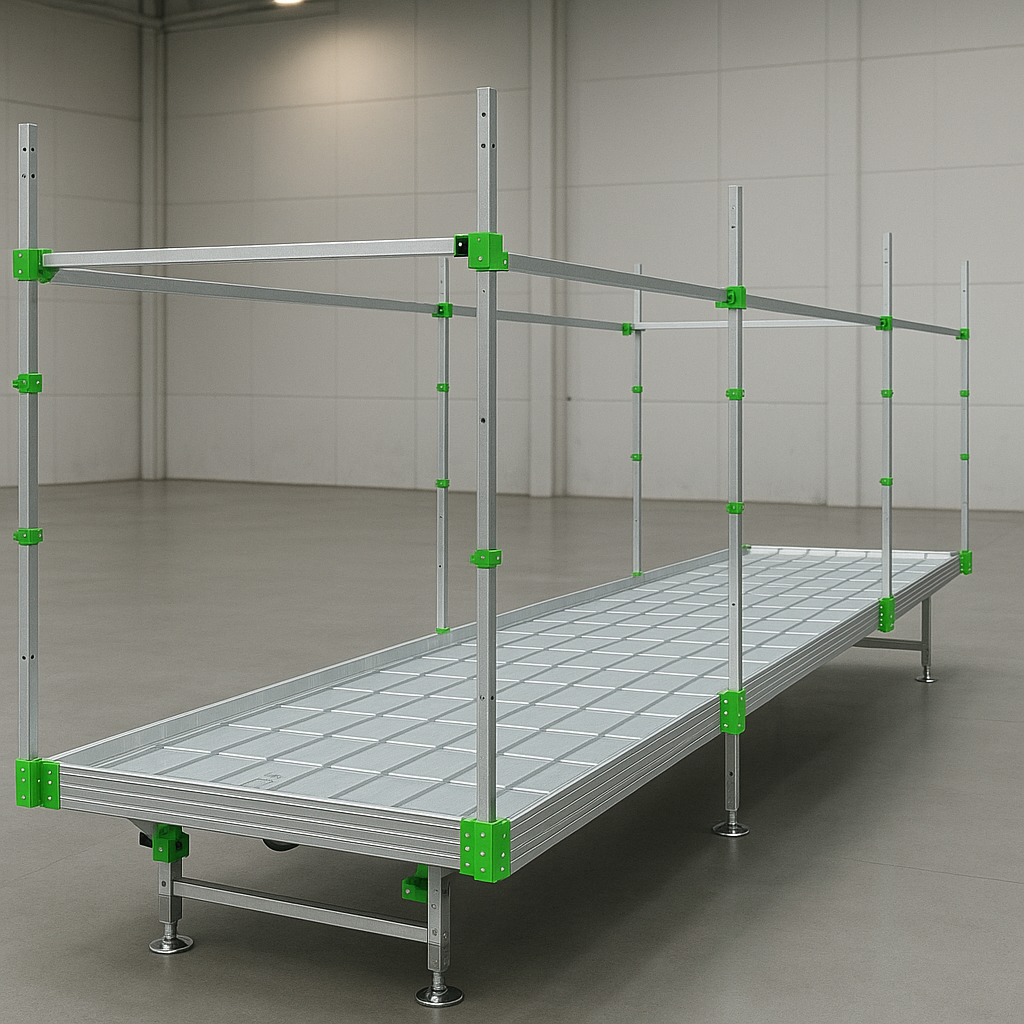
A next generation rolling bench is far more than a greenhouse table — it’s a precision-engineered stainless steel rolling bench designed to increase canopy, enhance workflow efficiency, and reduce long-term operating costs. These professional-grade benches move smoothly, withstand harsh grow environments, and allow growers to reclaim wasted aisle space for productive canopy.
In short, it’s the future of hydroponic bench systems built to keep your facility ahead of the curve.


What Makes a “Next Generation” Rolling Benches Truly Next-Gen?

Engineered Improvements That Actually Matter

The phrase “next generation” gets used loosely in agriculture equipment marketing. In this case, it’s backed by real design and material upgrades. Traditional galvanized steel benches often struggle in humid, nutrient-rich environments — they corrode, weaken, and eventually need replacement. By contrast, the next generation rolling bench uses full stainless steel construction to eliminate those weaknesses, giving growers a system that’s stronger, cleaner, and longer-lasting.

With a single access aisle and smooth side-to-side travel, growers can significantly increase plant counts without expanding facility square footage. This efficient layout simplifies maintenance, harvest, and daily operations, keeping your team agile and your workflow optimized. Whether you run a hydroponic greenhouse or a climate-controlled indoor facility, mobile grow benches are now the foundation of high-yield cultivation.

Why Stainless Steel Is the Superior Choice

Durability in Real-World Grow Environments

Unlike painted or galvanized steel, stainless steel provides superior resistance to rust, moisture, and chemical wear.
In an environment where irrigation, nutrients, and cleaning cycles are constant, this durability is crucial. It ensures benches stay structurally sound for years, cutting down on replacements, downtime, and maintenance costs.

Stainless surfaces are also far easier to clean and sanitize, supporting strict biosecurity protocols. Whether you’re growing leafy greens, ornamentals, or high-value crops, this hygienic advantage plays a direct role in crop quality, pest prevention, and compliance with Good Manufacturing Practices (GMP). That makes stainless steel grow equipment ideal for both organic and commercial greenhouse operators.

7 Powerful Reasons to Upgrade Your Rolling Benches Now

1) Maximize Canopy Per Square Foot

Every inch counts in a commercial grow. Fixed benches require multiple permanent aisles, wasting valuable space.
A next generation rolling bench eliminates static aisles, allowing you to slide tables together and open just one working aisle at a time. This can increase canopy coverage by 10–20% depending on room size, boosting revenue potential without construction or expansion costs.

2) Stainless Steel Durability & Hygiene

Humidity, fertilizers, and cleaning agents accelerate corrosion in standard materials. Stainless steel resists rust, pitting, and structural breakdown, maintaining smooth, clean surfaces even after years of exposure. This is the difference between benches that need replacement every few years and infrastructure you can rely on for a decade or more.

3) Smooth, Safe, and Efficient Workflow

The rolling track system allows workers to create access aisles exactly where they’re needed. No more weaving through unnecessary lanes or moving plants just to reach your canopy. With anti-tip hardware and low-friction rolling tracks, your team can move benches safely and confidently, even under heavy load. Faster movement equals faster maintenance, pruning, IPM, and harvest cycles — which directly improves labor efficiency.
Explore efficient workflows.

4) Flexible, Future-Proof Layouts

Cultivation strategies evolve over time. New crop varieties, multi-tier racks, and changing irrigation methods all demand adaptable infrastructure. The modular design of the next generation rolling bench allows you to scale up, reconfigure, or retrofit without tearing out your existing layout. Whether you’re transitioning from veg to flower or adding a new strain block, the system adapts easily — one reason these mobile benches have become a standard in commercial greenhouse operations.

5) Precision Irrigation & Drainage Integration

Stainless frames work seamlessly with flood trays, drain lines, and drip irrigation systems. Smooth edges and corrosion-resistant surfaces keep water flow clean and predictable, helping maintain consistent moisture levels and preventing standing water. This not only improves plant health but also keeps floors safer for your crew.
Learn about irrigation systems.

6) Lower Total Cost of Ownership

While stainless steel benches may cost more upfront, they pay for themselves through dramatically reduced replacements and maintenance. With fixed, non-stainless benches, corrosion often forces frequent patching, repainting, or full replacement. With stainless, you’re investing once in infrastructure built to last. When you factor in yield improvements, labor savings, and reduced downtime, the ROI becomes clear.

7) Professional Image & GMP-Friendly Design

Modern cultivation facilities are more than grow rooms — they’re inspected environments where compliance, brand image, and cleanliness matter.
Stainless benches project a clean, professional look to partners, inspectors, and customers. Their sleek, polished appearance reflects operational discipline and supports GMP certification requirements. For facility designers, integrating premium rolling benches from reputable vendors such as ledgrowlightsdepot helps build a modern, inspection-ready grow room.

Key Engineering Highlights

  • Full Stainless Frame: Rust-resistant, sanitary, and structurally superior to galvanized steel.
  • Precision Rolling Tracks: Smooth lateral travel, allowing just one access aisle on demand.
  • Heavy-Duty Load Capacity: Designed to support thousands of pounds of substrate, trays, and trellis.
  • Trellis & Irrigation Ready: Compatible with common flood trays, irrigation components, and crop supports.
  • Modular Installation: Pre-drilled components make setup fast, clean, and repeatable across multiple rooms.

Real Operational Wins for Growers

More canopy equals more production. Reclaiming aisle space translates into more plants per square foot, which can mean higher yield without extra building costs. Better sanitation leads to healthier crops. Stainless surfaces clean quickly and resist contamination, making pest and disease prevention easier. Improved workflow drives lower labor costs, as workers spend less time navigating the space and more time being productive by Maximize grow efficiency.

Stainless benches also hold up under continuous use — day after day, season after season — supporting flood irrigation cycles, trellis systems, and heavy root zones without bending or warping. This resilience turns your benching from an ongoing expense into a long-term asset that supports automation, efficient irrigation layouts, and even vertical growing techniques.

Perfect for Indoor & Greenhouse Applications

Whether your operation is an indoor warehouse, hybrid greenhouse, or fully climate-controlled cultivation space, this bench adapts.
Its rolling action provides easy canopy access while maintaining tight plant spacing for maximum density. Greenhouse operators appreciate its corrosion resistance in high humidity and condensation. Indoor growers benefit from its modularity, rapid installation, and minimal maintenance needs.

It’s suitable for every stage of cultivation — from nursery and propagation to flowering and finishing. The stability of the frame also helps keep trellis tension consistent, supporting uniform canopy height and improved light penetration. These subtle operational advantages often separate average yields from exceptional results.
Explore compatible grow lights.

Beyond Hardware: A Smarter Infrastructure Choice

Choosing a next generation rolling bench isn’t just about buying equipment — it’s a strategic infrastructure decision.
It’s about designing a cultivation environment that maximizes space, supports efficient workflows, and stands up to years of intense production. 
This upgrade pays dividends in every harvest cycle, reducing downtime and increasing profitability.

With better space utilization, easier cleaning, and smoother worker movement, these benches enhance productivity without demanding more real estate. They make expansions more manageable and facility retrofits less disruptive. Most importantly, they set your operation up for scalable, sustainable growth.

Take the Next Step

If you’re still relying on fixed galvanized benches or outdated rack systems, now is the time to step into the future. The next generation rolling bench is quickly becoming the gold standard in modern cultivation infrastructure — delivering efficiency, durability, and clean aesthetics that match the demands of commercial production.

Visit the product page
to explore configurations, sizing options, and specifications for your facility.
Discover more grow operation resources.
Upgrading your benches isn’t just an operational decision — it’s a strategic growth move designed to make every square foot count.